Most Valuable Mercury Dimes: The Mercury dime is one of the most beloved coins in American numismatics. Minted between 1916 and 1945, it features the iconic design of Liberty wearing a winged cap, symbolizing freedom of thought. Collectors often refer to it as the Mercury dime because of its resemblance to the Roman god Mercury, though its official name is the Winged Liberty Head dime. Over the years, certain issues have become highly valuable due to rarity, condition, and historical significance. Among them, the 1916-D Mercury dime stands out as one of the most sought-after coins in the series. This guide explores the most valuable Mercury dimes, with a focus on the 1916-D and other rare silver coins that continue to captivate collectors.
Key Highlights
- The Mercury dime was minted from 1916 to 1945 and remains a collector favorite.
- The 1916-D Mercury dime is the rarest and most valuable issue in the series.
- Mint marks play a crucial role in identifying rarity and value.
- Condition and grading standards significantly affect pricing.
- Other rare dates and varieties, such as the 1921 and 1942/41 overdate, also command high premiums.
- Collectors value Mercury dimes for their silver content as well as historical significance.
The History of the Mercury Dime
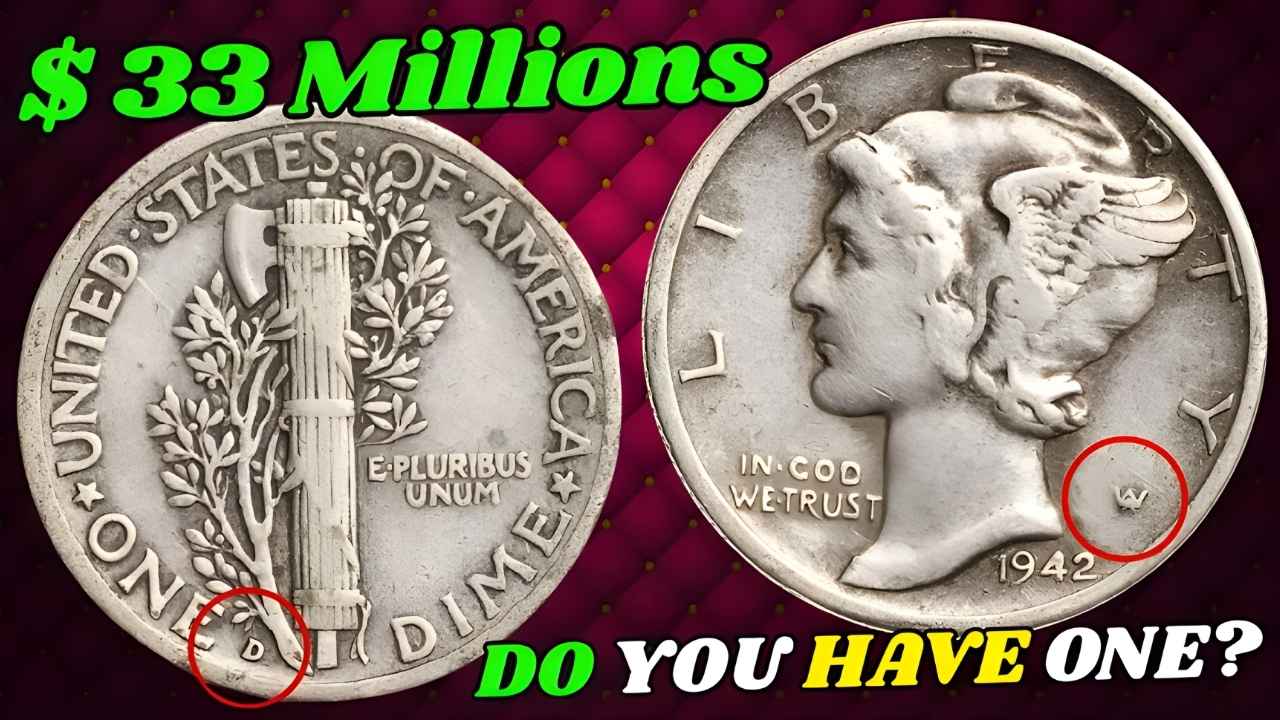
The Mercury dime was designed by Adolph A. Weinman, a sculptor whose artistry also graced the Walking Liberty half dollar. Introduced in 1916, the coin replaced the Barber dime and quickly became admired for its elegance. The obverse features Liberty with a winged cap, while the reverse depicts a fasces and olive branch, symbolizing strength and peace.
The series ran until 1945, when it was replaced by the Roosevelt dime. During its three decades of production, the Mercury dime was struck at multiple mints, including Philadelphia, Denver, and San Francisco. Each year’s issue carries unique characteristics, and certain mintages are far scarcer than others, making them highly collectible today.
The Legendary 1916-D Mercury Dime
The 1916-D Mercury dime is the crown jewel of the series. With a mintage of only 264,000 coins, it is the lowest production year of all Mercury dimes. This scarcity has made it one of the most valuable coins in American numismatics.
Collectors prize the 1916-D in all conditions, though uncirculated examples are exceedingly rare. Even heavily worn specimens can command significant prices due to their rarity. High-grade examples certified by professional grading services often sell for thousands of dollars, and pristine Mint State coins can reach tens of thousands.
The 1916-D is instantly recognizable by its small “D” mint mark on the reverse, located near the bottom left of the fasces. Its combination of low mintage, historical significance, and collector demand ensures its place as one of the most iconic coins in U.S. history.
Other Rare Mercury Dimes
While the 1916-D is the most famous, several other Mercury dimes are highly valuable.
- 1921 and 1921-D: Both issues had low mintages due to reduced coin production after World War I. These coins are scarce and command strong premiums in higher grades.
- 1926-S: Another low-mintage coin, the 1926-S is difficult to find in well-preserved condition.
- 1942/41 Overdate: This famous error variety occurred when a 1941 die was overpunched with 1942. The result is a dramatic doubled date that collectors eagerly seek.
- 1931-D: With limited production during the Great Depression, this issue is scarce and valuable in higher grades.
Each of these coins adds depth to the Mercury dime series, offering collectors opportunities to pursue rare and historically significant pieces.

Mint Marks and Their Importance
Mint marks are small letters on coins that indicate where they were produced. For Mercury dimes, the most common mint marks are:
- P for Philadelphia (often no mint mark)
- D for Denver
- S for San Francisco
Mint marks are crucial for identifying rarity. For example, the 1916-D is valuable precisely because of its Denver mint mark and low mintage. Similarly, the 1921-D is scarcer than its Philadelphia counterpart. Collectors pay close attention to mint marks when evaluating Mercury dimes, as they can dramatically affect value.
Condition and Grading Standards
The condition of a coin is one of the most important factors in determining its value. Mercury dimes are graded on a scale ranging from Poor (P-1) to Mint State (MS-70). Even small differences in grade can result in significant price variations.
A heavily worn 1916-D may still sell for hundreds of dollars, while a Mint State example can reach tens of thousands. Collectors should pay attention to details such as luster, strike quality, and wear on Liberty’s portrait. Professional grading services provide standardized assessments, giving buyers and sellers confidence in the coin’s quality.
Silver Content and Bullion Value
Mercury dimes are composed of 90 percent silver and 10 percent copper. Each coin contains approximately 0.0723 troy ounces of silver. While their collector value often far exceeds their bullion value, the silver content provides a baseline worth.
During times of rising silver prices, even common Mercury dimes gain additional appeal. Collectors appreciate the dual value of these coins, both as historical artifacts and as tangible stores of precious metal.
Table of Notable Mercury Dimes and Values
| Year | Mint Mark | Mintage | Collector Notes |
|---|---|---|---|
| 1916-D | D | 264,000 | Rarest and most valuable Mercury dime |
| 1921 | None | 1,230,000 | Scarce due to low production |
| 1921-D | D | 1,080,000 | Scarcer than Philadelphia issue |
| 1926-S | S | 970,000 | Difficult to find in high grades |
| 1942/41 | None or D | Error variety | Famous overdate error, highly prized |
| 1931-D | D | 1,260,000 | Scarce Depression-era issue |
Collecting Strategies for Mercury Dimes
Collectors often adopt different strategies depending on their goals. Some aim to build complete year sets, while others focus on acquiring key dates and rare varieties. For those seeking investment potential, the 1916-D and 1942/41 overdate are essential acquisitions.
Another strategy is to collect by mint mark, assembling sets from Philadelphia, Denver, and San Francisco. Proof coins, though limited in the Mercury dime series, also add depth to collections. Regardless of approach, collectors should prioritize quality and authenticity, seeking coins certified by reputable grading services.